Back-to-School Tips from a Long-Time Virtual Teacher Helping Students Start Strong at Washington Virtual Academies
As Washington families prepare for a new school year, students are organizing supplies, adjusting sleep schedules, and getting ready to reconnect with teachers and classmates. For families beginning or returning to online learning, back-to-school preparation also means creating routines, setting up a productive learning environment, and understanding how teachers, students, and Learning Coaches work together to support success.
Washington Virtual Academies (WAVA) middle school teacher, Jen Devenere, has spent nearly two decades helping students succeed through one of online learning’s greatest strengths: the streamlined partnership between teachers, students, and Learning Coaches.
Based in Grandview in Washington’s Yakima Valley, Mrs. Devenere is entering her 20th year with WAVA after joining the online public school during the 2006–2007 school year. With nearly two decades in online teaching, she has helped hundreds of students build confidence, strengthen their math and science skills, and discover that meaningful, hands-on learning can happen anywhere, even at the kitchen table.
Before joining WAVA, Mrs. Devenere taught third grade and Special Education. She later served as a Master Teacher and mentor before making a deliberate return to the classroom, where she felt she could have the greatest direct impact on students.
Her approach is rooted in one guiding belief: “Every student can learn—no matter what. We have to meet them where they are and give them a bit of extra attention and the right kind.”
As families prepare for the school year ahead, Mrs. Devenere shares a few key lessons learned to help build a strong foundation from the very first day.
1. Establish a Consistent Routine and Allow Time to Adjust
The transition from summer break to a new school year does not happen overnight. Mrs. Devenere encourages families to begin rebuilding consistent sleep, morning, and school-day routines before classes begin.
Having predictable start times, scheduled breaks, and dedicated periods for assignments can help students understand what is expected while developing important time-management skills. At the same time, families should recognize that finding the right rhythm may take time. Online learning at WAVA provides flexibility, but that does not mean learning without structure. A consistent daily routine can help students stay focused, organized, and prepared to participate in live instruction.
Learning Coaches can support the transition by reviewing schedules with their students, helping them identify daily priorities, and checking in regularly without immediately taking over. As students become more comfortable, they can gradually assume greater responsibility for managing their own school day.
2. Create a Learning Space That Helps Your Student Feel Comfortable and Focused
A successful virtual classroom does not need to be elaborate. A quiet, comfortable area with reliable technology, good lighting, basic school supplies, and limited distractions can provide students with a consistent place to learn.
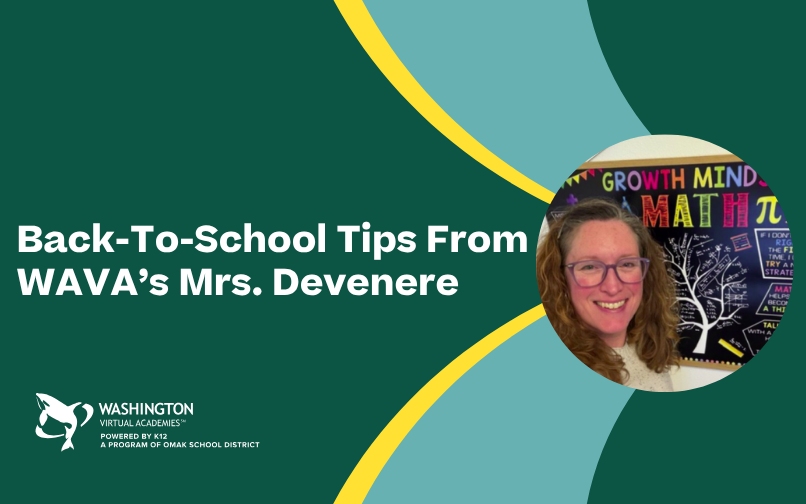
Mrs. Devenere Mrs. Devenere understands the importance of creating an environment that feels both welcoming and engaging. Her own virtual classroom includes visual elements, such as a chalkboard backdrop, that help capture students’ attention and create a sense of connection across the screen. She encourages families to involve students in setting up their learning spaces. Allowing students to choose a few supplies, organize their materials, or add personal touches can help build excitement and ownership as the school year begins. Students should also keep frequently used materials nearby—including notebooks, pencils, headphones, chargers, and science supplies—so they are ready to participate without losing valuable instructional time.
3. Online Learning Is Interactive and Teacher-Led
One of the most common misconceptions Mrs. Devenere encounters is that online education is passive, isolated, or entirely self-guided.
“Online schools are not passive or self-guided. My students participate in live, daily instruction aligned with state standards, just like traditional classrooms,” said Mrs. Devenere.
At WAVA, students engage with teachers and classmates through live instruction, discussions, collaborative activities, breakout sessions, assignments, and individualized support. Mrs. Devenere’s middle school math and science classes are intentionally designed to encourage participation and curiosity. Her students do not simply watch lessons on a screen; they ask questions, solve problems together, participate in group activities, and apply academic concepts through creative projects.
For new students, participating in a virtual classroom may feel unfamiliar at first. Mrs. Devenere encourages students to attend live classes consistently, communicate when they need help, and take small steps toward becoming active members of their classroom communities.
4. Build a Strong Teacher–Student–Learning Coach Partnership
Mrs. Devenere believes one of the greatest strengths of online education is the partnership among the teacher, student, and Learning Coach—typically a parent, guardian, or other trusted adult.
Teachers provide instruction, academic expertise, feedback, and individualized support. Learning Coaches offer daily encouragement, help students establish routines, and reinforce positive learning habits at home. Students are active participants who gradually build independence, confidence, and ownership of their education.
Open communication is essential, and Mrs. Devenere encourages Learning Coaches to regularly review school communications, understand their students’ schedules, celebrate progress, and contact teachers when questions or concerns arise. Families do not have to navigate online education alone. Teachers and Learning Coaches share a common goal: helping each student grow and succeed.
5. Encourage Students to Ask Questions and Learn from Their Peers
Every student engages differently. Some are comfortable speaking during live instruction, while others may need additional time and encouragement before participating. Mrs. Devenere’s background in Special Education has shaped her thoughtful approach to supporting diverse learners. She closely monitors student progress, adapts instruction when needed, and creates opportunities for students to build confidence in smaller, lower-pressure settings. Peer collaboration is one of her favorite strategies. In virtual breakout rooms, students can work together, explain concepts, and learn from one another.
“It’s fun peeking into my Engageli live-session breakout rooms and seeing one of my shy students with their camera on while a high-achieving peer mentors them. That peer-to-peer connection takes away the ‘big, scary teacher’ factor,” Mrs. Devenere shared.
These moments allow students to strengthen academic skills while also developing communication, leadership, and teamwork. She encourages students to remember that asking for help is an important part of learning. Whether they reach out to a teacher, Learning Coach, or classmate, questions can lead to greater understanding and confidence.
6. Make Learning Hands-On
Online learning does not mean students spend the entire day passively looking at a screen. In Mrs. Devenere’s classroom, Fridays are dedicated to science. During live, hands-on labs, she demonstrates experiments on camera while students follow along from home. These activities transform kitchens, desks, and learning spaces into interactive science labs where students can observe, experiment, ask questions, and connect lessons to the world around them. By combining imagination with science, she helps students explore complex concepts in ways that are engaging, memorable, and meaningful; blending creativity with academic rigor.
One memorable end-of-year project invited students to design an alien avatar capable of surviving on a planet in the solar system. Students used real scientific data—including information about temperature, atmosphere, gravity, and environmental conditions—to determine which characteristics their alien would need to survive.
7. Connect Classroom Lessons to the Real World
Learning at WAVA extends beyond the virtual classroom. Mrs. Devenere participates in in-person enrichment experiences that allow students and families to meet, build relationships, and connect academic concepts to real-world environments.
Past and upcoming experiences have included planetarium visits, explorations of local wind farms, and large-scale field trips to destinations such as Grand Coulee Dam (During wind-energy experiences, students had the opportunity to learn about renewable energy and explore how turbines operate.) Planetarium visits bring lessons about space and the solar system to life, while trips to Grand Coulee Dam connect science, engineering, energy, geography, and Washington history.
These experiences reinforce classroom learning while helping students develop friendships and a stronger sense of community.
8. Focus on Growth, Not Perfection
The beginning of a school year can bring excitement as well as uncertainty, especially for students transitioning from a traditional classroom or returning after a difficult academic experience. Mrs. Devenere encourages families to focus on progress rather than expecting students to master every routine, technology tool, or responsibility immediately. Her mission is simple but powerful: Ensure every student feels seen, supported, and capable of success, and celebrate small accomplishments: attending every live class, asking a question, completing an assignment independently, helping a classmate, improving a math skill, or participating on camera for the first time.
A Career Built Around Meeting Students Where They Are
Mrs. Devenere’s passion for education began long before she entered the classroom. As a middle school student, she visited her sister’s third grade classroom and discovered how meaningful a teacher’s influence could be.
Inspired by educators who made a lasting difference in her own life and naturally drawn to supporting students who may need someone in their corner, Mrs. Devenere knew teaching was the right path.
As a new school year begins, she hopes students and families remember that success is built one connection, one question, one experiment, and one accomplishment at a time.
“At the end of the day, if I can make a difference for my students and give them the kind of meaningful experience my own teachers gave me, that is incredibly fulfilling,” Mrs. Devenere said.
Back to BlogRelated Blog Posts

Fostering a Growth Mindset in 2025: How WAVA Peer-to-Peer...
At Washington Virtual Academies, fostering a growth mindset among students is a top priority. One of […]

Creating Virtual Communities: The Social Benefits of Online...
For students with social anxiety, traditional classroom environments can often feel overwhelming. The bustling hallways, crowded […]

Learn Through the Holidays With Winter Quest
Discover fun, free activities that turn the holidays into a season of curiosity, creativity, and growth. […]